
flexible pcb board manufactured
The manufacturing process of flexible PCBs (Printed Circuit Boards) involves several intricate steps to ensure the production of high-quality boards that meet the specific requirements of each application. While the process shares similarities with that of rigid PCBs, there are unique considerations and techniques involved in manufacturing flexible PCBs due to their bendable and flexible nature.
The manufacturing process begins with the preparation of the substrate, which serves as the base material for the flexible pcb board. The substrate is typically made from flexible materials such as polyimide (PI) or polyester (PET) films. These films are cleaned, treated, and coated with an adhesive material to enhance adhesion and provide a stable foundation for the circuitry.
Once the substrate is prepared, copper foil is laminated onto one or both sides of the substrate using heat and pressure. The copper foil serves as the conductive layer for the circuitry and is typically thin to facilitate bending and flexibility. The thickness and grade of the copper foil are chosen based on the electrical requirements of the application.
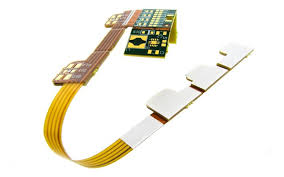
How are flexible pcb board manufactured?
Next, the circuit pattern is created on the copper foil using a process called photolithography. A photosensitive material, known as photoresist, is applied to the surface of the copper foil and exposed to UV light through a photomask that defines the desired circuit pattern. The exposed areas of the photoresist harden, while the unexposed areas remain soluble. The unexposed photoresist is then washed away, leaving behind the patterned circuitry on the copper foil.
After patterning, the exposed areas of the copper foil are etched away using an etchant solution, leaving only the desired circuit traces and pads. The etching process removes the unwanted copper while preserving the circuit pattern defined by the photoresist. The remaining photoresist is then stripped away, leaving clean and precise circuitry on the substrate.
Once the circuitry is defined, a coverlay is applied to the surface of the flexible PCB to insulate the circuit traces and provide mechanical protection. The coverlay, typically made from polyimide or polyester film, is laminated onto the surface of the PCB using heat and pressure. The coverlay is aligned with the circuit pattern and bonded to the substrate, leaving openings for solder pads and vias.
Holes are drilled through the flexible PCB to create vias for interconnecting layers and mounting components. The drilled holes are then plated with copper to provide electrical continuity between the layers. Plating ensures that electrical signals can pass through the vias and enables the mounting of components on both sides of the PCB.
After drilling and plating, the flexible PCB undergoes surface finishing to improve solderability and protect the circuitry from oxidation and environmental damage. Common surface finishes include immersion gold, HASL (Hot Air Solder Leveling), and ENIG (Electroless Nickel Immersion Gold). The chosen surface finish depends on factors such as cost, compatibility with assembly processes, and environmental requirements.
Once the manufacturing process is complete, the flexible PCB undergoes rigorous inspection and testing to ensure quality and reliability. Visual inspection, electrical testing, and dimensional measurements are performed to verify that the PCB meets the specified requirements and tolerances. Any defects or discrepancies are identified and addressed before the PCB is released for assembly and integration into electronic devices.
In conclusion, the manufacturing process of flexible PCBs involves several precise steps to create circuitry that can bend and flex without damage. From substrate preparation to final inspection and testing, each stage of the process is carefully executed to ensure the production of high-quality boards that meet the demanding requirements of modern electronic applications. By leveraging specialized materials and techniques, manufacturers can produce flexible PCBs that offer superior performance, reliability, and flexibility in a wide range of industries.