

manufacture an RF circuit board
Manufacturing an RF (Radio Frequency) circuit board involves a series of specialized processes designed to meet the unique requirements of high-frequency signal transmission and reception. RF circuit boards are essential in various applications, such as wireless communication systems, satellite communication, radar, and medical devices. Given the sensitivity of RF signals to noise, impedance mismatches, and interference, careful attention to detail is required during the manufacturing process to ensure the final product performs optimally. The process of manufacturing an RF circuit board consists of several key stages, including design, material selection, fabrication, assembly, and testing.
The first step in manufacturing an RF circuit board is the design phase. This phase is crucial because it determines the layout, component placement, and routing of traces on the board. RF circuit board designs typically use specialized software tools such as CAD (Computer-Aided Design) or PCB (Printed Circuit Board) design tools to create an accurate schematic and layout. During the design, factors like impedance matching, trace width, ground plane design, and the use of via holes are carefully considered to minimize signal loss and interference. In RF designs, maintaining a consistent impedance (usually 50 ohms) is essential to prevent signal reflections that could degrade performance. The layout also focuses on minimizing the loop area of signal traces to reduce noise and ensuring that the RF components are placed with minimal crosstalk.
Once the design is complete, the next step is material selection. RF circuit boards are made using materials that are optimized for high-frequency applications. The most commonly used materials include FR4 (a composite of fiberglass and epoxy resin), PTFE (Polytetrafluoroethylene), and other advanced laminates such as Rogers and Taconic materials. PTFE, often referred to as Teflon, is highly favored for RF applications due to its low dielectric constant, which minimizes signal loss and allows high-frequency signals to travel with minimal attenuation. The choice of material plays a significant role in the performance of the final rf circuit board, particularly for high-speed and high-frequency applications where signal clarity is critical.
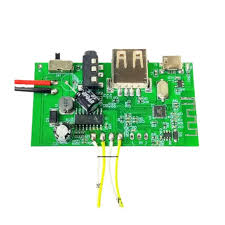
How do you manufacture an RF circuit board?
After the material has been selected, the actual fabrication process begins. This involves several steps, starting with the creation of the copper-clad laminate. The chosen material is coated with a thin layer of copper, which will form the circuit traces. The copper-clad laminate is then treated to create the desired circuit pattern, using either subtractive or additive methods. In the subtractive process, the copper is etched away using a chemical etching solution to leave behind the desired circuit pattern. The etching process removes the excess copper, leaving the signal traces and ground planes intact. In the additive process, the copper is deposited onto the substrate in a controlled manner, forming the required circuit traces.
After the circuit pattern is formed, the next step is drilling. Holes are drilled into the board to accommodate vias (vertical interconnections between layers of the PCB) and component lead holes. For RF boards, precision drilling is essential because even minor variations in hole size can affect the performance of the circuit. These holes are typically plated with copper to ensure electrical conductivity between layers. The drilling process is followed by the application of solder mask, which is a protective layer that covers the copper traces and helps prevent short circuits or oxidation. The solder mask also serves as an insulating layer to ensure that only the pads for components are exposed.
Once the solder mask is applied, the next step is the placement of components. In RF circuit board assembly, components are typically placed using automated pick-and-place machines. These machines precisely position components such as capacitors, resistors, inductors, diodes, and active RF components like amplifiers, oscillators, and mixers on the board. After placement, the components are soldered to the board using either wave soldering or reflow soldering methods. Reflow soldering, which involves heating the entire board to melt the solder, is often preferred for precision assembly in RF applications.
After assembly, the RF circuit board undergoes testing and quality control to ensure it meets the required performance standards. Functional testing involves checking the board for signal integrity, ensuring that the signals flow through the traces without excessive attenuation or distortion. Test equipment such as a network analyzer is used to measure parameters like return loss, insertion loss, and impedance to confirm that the board operates within the desired frequency range and performance specifications. If the circuit board passes these tests, it is then subjected to additional checks, including visual inspection, electrical testing for continuity, and thermal cycling to assess its durability under real-world conditions.
Finally, the RF circuit board is ready for packaging and shipping. Depending on the application, additional components such as connectors, heat sinks, or enclosures may be added. The finished boards are carefully packed to prevent damage during shipping and are sent to customers or for further integration into end products.
In conclusion, manufacturing an RF circuit board involves a detailed and precise process that ensures high-frequency signals are transmitted with minimal loss, interference, and distortion. The key stages of RF circuit board manufacturing, including design, material selection, fabrication, assembly, and testing, all contribute to producing a high-quality, reliable product. The complexity of RF circuit board design and manufacturing makes it essential for engineers to consider various factors such as impedance matching, trace routing, and the use of specialized materials to achieve optimal signal clarity and performance in the final product.