

common challenges encountered in electronic circuit board assembly
Electronic circuit board assembly stands as a cornerstone in the manufacturing of electronic devices, facilitating the integration of various components into functional units. However, this intricate process is not without its challenges, presenting manufacturers with a myriad of obstacles that must be overcome to ensure the quality and reliability of the final product. From design complexities to manufacturing constraints, several common challenges are encountered in electronic circuit board assembly, each requiring careful consideration and strategic solutions.
One of the primary challenges in electronic circuit board assembly is managing the increasing complexity of circuit designs. As electronic devices become more sophisticated and feature-rich, the demand for densely populated circuit boards with intricate layouts continues to rise. Designers must navigate a multitude of factors, including signal integrity, thermal management, and electromagnetic interference, while striving to optimize space utilization and component placement. Balancing these competing requirements poses a significant challenge, often necessitating iterative design iterations and simulation studies to achieve the desired performance and reliability.
Furthermore, miniaturization presents a significant challenge in electronic circuit board assembly. With consumers expecting smaller and more compact electronic devices, manufacturers are under pressure to shrink the size of circuit boards while maintaining or even increasing functionality. Miniaturization introduces numerous technical challenges, including the placement of tiny components, routing of densely packed traces, and managing thermal dissipation in confined spaces. Achieving high levels of miniaturization requires advanced manufacturing techniques, precision equipment, and meticulous attention to detail throughout the assembly process.
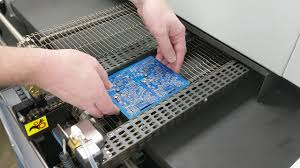
What are the common challenges encountered in electronic circuit board assembly?
Another common challenge in electronic circuit board assembly is ensuring the integrity of solder joints. Soldering is a critical process that establishes electrical connections between components and the circuit board, and any defects or weaknesses in solder joints can compromise the reliability of the assembly. Challenges such as insufficient solder, solder bridging, cold joints, and solder balling can arise due to factors like inadequate flux coverage, improper soldering temperatures, or uneven component placement. Implementing stringent soldering standards, quality control measures, and advanced inspection techniques is essential to detect and rectify soldering defects promptly.
Moreover, the proliferation of surface-mount technology (SMT) poses its own set of challenges in electronic circuit board assembly. While SMT offers numerous advantages, including smaller component sizes, higher component densities, and faster assembly speeds, it also introduces complexities related to component handling, solder paste deposition, and reflow soldering processes. Ensuring proper alignment and placement of surface-mount components, preventing solder paste misalignment or insufficient deposition, and mitigating issues such as tombstoning or solder bridging require careful optimization of SMT processes and robust quality assurance protocols.
Quality control is a pervasive challenge throughout the electronic circuit board assembly process. With the increasing complexity and miniaturization of circuit boards, detecting defects and ensuring adherence to quality standards becomes increasingly challenging. Automated optical inspection (AOI), X-ray inspection, and functional testing are essential tools for identifying defects such as soldering defects, component misplacements, shorts, and opens. However, implementing comprehensive quality control measures entails significant investments in equipment, training, and infrastructure, posing a challenge for manufacturers seeking to balance cost-effectiveness with product quality.
In conclusion, electronic circuit board assembly presents manufacturers with a host of challenges that must be navigated to ensure the quality, reliability, and performance of electronic devices. From managing design complexities and achieving miniaturization to ensuring the integrity of solder joints and implementing robust quality control measures, addressing these challenges requires a combination of expertise, innovation, and strategic planning. By leveraging advanced technologies, process optimizations, and stringent quality assurance protocols, manufacturers can overcome these challenges and deliver electronic devices that meet the demands of today’s consumers.


